If part of your yard keeps washing out after every hard rain, you’ve probably looked into native plants for erosion control as a fix. And sometimes that’s exactly the right move.
Native plants can be a smart way to help control erosion on a slope. Their roots hold soil, slow runoff, and cover bare ground better than thin grass or another layer of mulch that ends up at the bottom of the hill after the next storm.
But here’s the catch: native plants are helpful, not magic. If your slope is dealing with heavy, fast-moving runoff, plants alone might not fix the whole problem. The right answer depends on the slope, the soil, the sun, the drainage, and how much erosion has already happened.
Around Jefferson City, Columbia, Lake of the Ozarks, and surrounding Mid-Missouri communities, yards deal with heavy rain, clay soil, slopes, and drainage issues that can make erosion worse over time. Native plants can be part of the answer, but they need to be matched to your specific property and conditions to actually do the job.
Why Native Plants Can Help With Erosion
Erosion happens when soil sits exposed and water moves across it too fast. On a slope, that gets worse since gravity is pulling the water downhill along with everything else.
Native plants help because a lot of them grow deeper, stronger root systems than standard turf grass. Those roots grip the soil and keep it from washing away as easily. The growth above ground also shields bare soil from heavy rain hitting it directly.
Whether a specific plant actually works for your slope depends on the site conditions, which is where things get more specific.
Native Grasses for Sunny Slopes
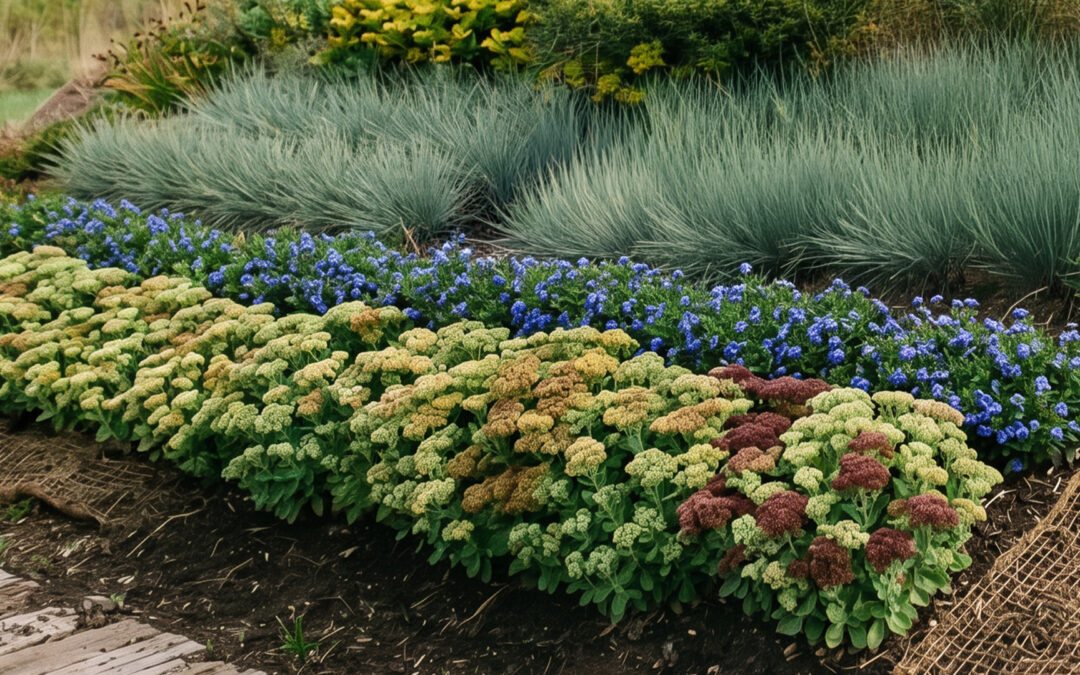
Native grasses are often the right place to start for sunny slopes and open areas. They stabilize soil, handle Missouri weather, and give the landscape a more natural look than turf.
Here are a few that tend to work well in this region:
Little Bluestem
A Missouri native grass that works well in sunny areas with a strong, upright look. It adds structure to a slope while supporting soil stability.
Switchgrass
Another Missouri native that works well in larger areas, used where you need stronger root growth and taller coverage.
Prairie Dropseed
A softer look that works well in landscape beds, slopes, or naturalized areas where you want erosion control without the yard looking too wild.
Native grasses are a good fit when the slope gets plenty of sun and the water flow isn’t so strong that new plants keep washing out before they get established.
Native Ground Covers for Bare Soil
Ground covers help protect bare soil, especially on smaller slopes or thin areas where grass isn’t doing the job.
A few worth considering for that kind of spot:
Wild Strawberry
A low-growing native plant that spreads and helps cover exposed ground, useful in smaller areas where you want a natural, low-profile look.
Pennsylvania Sedge
Works well in partly shaded areas and under trees where turf grass struggles. Softer, grassy appearance, fills in bare spots nicely.
Common Violets
Low-growing and good for covering soil in naturalized areas. Some people love them, some treat them like weeds. Like a lot of things in landscaping, it depends on where they’re growing and what look you’re after.
Ground covers work best for mild to moderate erosion or bare areas that just need coverage. If water’s cutting channels through the soil, ground cover alone probably won’t be enough.
Native Shrubs for Bigger Erosion Problems
Shrubs help when a slope needs more structure. They bring deeper roots, more height, and stronger coverage than smaller plants.
A few native shrubs that hold up well in the right setting:
Ninebark
A hardy native shrub that works well in landscape areas where you need structure and soil support.
Dogwood
Native dogwoods help stabilize areas while adding seasonal interest. The right type depends on your site conditions.
Elderberry
Works well in areas with more moisture and space. Not for every small yard bed, but useful in naturalized areas.
Buttonbush
Likes wetter conditions, making it a solid option near drainage-prone areas or lower spots that hold more moisture.
Shrubs aren’t always needed for a mild erosion issue, but they’re useful when the slope is larger, the soil’s actively moving, or the landscape needs stronger plant structure overall.
Native Flowers and Perennials for Color and Coverage
Native flowers and perennials add color while helping cover and protect soil. They’re not usually the full erosion-control plan by themselves, but they’re a helpful part of a larger planting design.
A few that pair well with the grasses and shrubs above:
Black-Eyed Susan
A tough native perennial that brings bright color and works well in sunny areas.
Purple Coneflower
A familiar Missouri native that adds color, supports pollinators, and helps fill in planted areas.
Bee Balm
Useful in sunny to partly sunny areas, adds a more natural, meadow-like feel to the landscape.
Asters
Provide late-season color and help round out a planting area with more coverage through the year.
Perennials are especially useful mixed with grasses and shrubs. A slope planted with just one type of plant usually doesn’t perform as well as a more layered design.
Match the Plant to the Slope
The best native plant for erosion control isn’t just the one with the deepest roots. It’s the one that actually fits your slope.
Before you plant anything, think through a few things: is the area sunny or shaded? Does the soil stay wet or dry out fast? Is the slope gentle or steep? Is the water spreading out evenly, or is it cutting one clear path through the dirt?
And here’s the one that matters most: is the erosion happening near a patio, driveway, walkway, foundation, or retaining wall? If so, this might be more than a planting issue. Water can wash out the support around those areas and turn into a bigger problem than a bare patch of dirt.
This is where WestCo’s landscaping services can help. The goal isn’t just picking pretty plants. It’s choosing plants that fit your yard and work with the way water actually moves across your property.
When Native Plants Are Not Enough
Native plants help reduce erosion, but they can’t fix every slope on their own.
If mulch keeps washing away, grass seed never stays put, or water keeps cutting the same path after every storm, the real issue is probably drainage or grading. Planting without fixing the water flow is like mopping the floor while the sink’s still running. You’ll stay busy, but you won’t solve much.
Some yards need drainage improvements before plants have a fair shot at establishing. Others need grading to spread water out instead of letting it rush downhill in one narrow path.
When a Retaining Wall May Be the Better Answer
Native plants work for a lot of slopes, but some slopes need more support than planting alone can give.
If the slope’s steep, the soil keeps sliding, or you’re trying to create a flatter usable space, a retaining wall may make more sense than plants by themselves. Retaining walls hold soil in place where elevation changes are too much for basic landscaping to manage. They also work well together with plants, the wall provides the structure, and native plants soften the look and cover the surrounding soil.
WestCo’s retaining wall services can help when erosion control needs more than plants and mulch.
How to Start Planning Your Native Plant Area
Once you know what you’re dealing with, it’s worth being patient. Native plants usually need time to establish before they provide their best erosion-control benefits. During that early stretch, the slope may still need mulch, erosion-control fabric, temporary stabilization, or drainage adjustments to help the plants take hold while their roots are still getting going.
The right plant in the wrong spot will struggle no matter how good it looks on paper, so it’s worth taking the time to get the match right before you commit to a full planting plan.
Not Sure Which Native Plants Will Actually Help?
If you’re not sure which native plants will help with erosion on your property, WestCo Outdoor Services can evaluate your slope, drainage, and soil conditions and recommend a practical landscaping plan built for your yard.
Contact WestCo Outdoor Services at 573-864-9378 to schedule a free consultation.