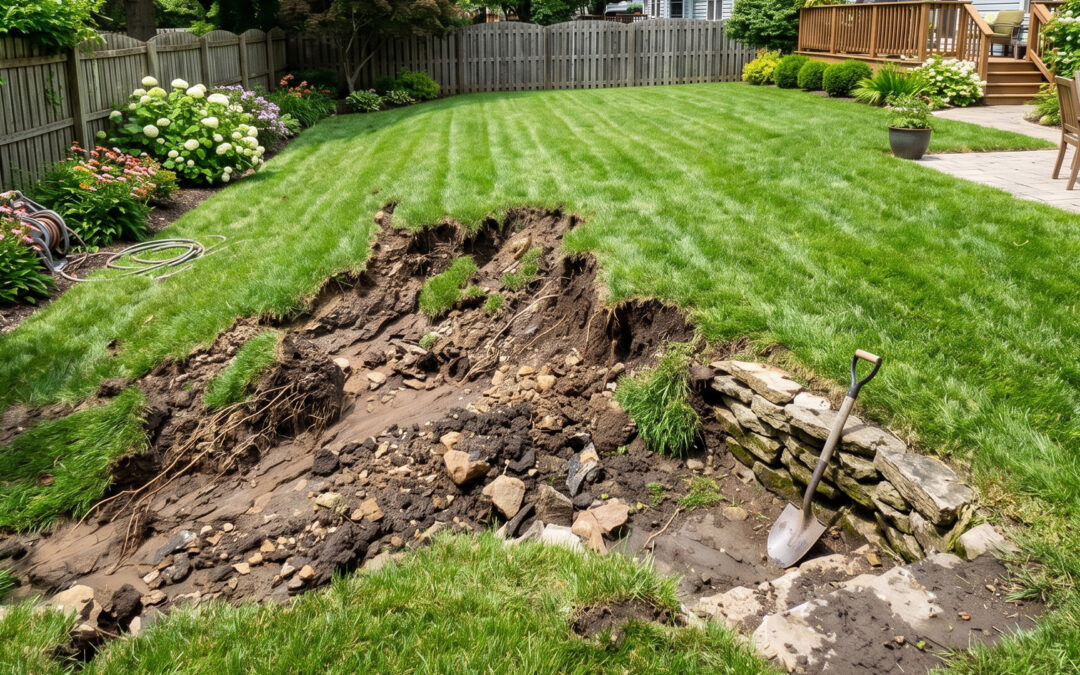
If a slope on your property keeps washing out after every hard rain, it’s not just in your imagination that it’s getting worse each time. Sloped ground is harder to hold in place, and once water finds an easy path downhill, it tends to keep using it. Each storm can make that path a little wider and a little deeper. That is usually where the question starts: how do you control erosion on a slope before the problem gets worse?
The short answer: you need to slow the water down, protect the soil, and stabilize the slope. But the right way to do that depends on how steep your slope is, where the water is actually coming from, and how much damage has already happened.
Around Jefferson City, Columbia, and surrounding Mid-Missouri communities, slopes deal with heavy rain, clay soil, and freeze-thaw cycles that loosen things up over time. Here’s how to think through the problem and figure out what actually needs to happen.
Why Your Slope Is Eroding
On a slope, gravity already has a head start. Add heavy rain, bare or thin soil coverage, and water rushing off a roof, driveway, or patio, and the soil starts moving downhill fast. What starts as a small washed-out patch can turn into ruts, gullies, exposed roots, and drainage problems at the bottom of the slope if it’s not addressed.
The steeper the grade, the faster water moves, and the more soil it carries away. That’s why throwing grass seed or mulch at the problem often doesn’t hold: if the runoff is moving too fast, it takes the fix with it.
Before choosing a solution, figure out where the water is coming from. Is it running off a downspout, driveway, or patio? Is the slope too bare to hold soil after rain? Is the grade sending water straight downhill without any way to slow it? The fix depends entirely on the cause.
Signs the Erosion Is Getting More Serious
Some slopes just need better ground cover. Others are showing signs the problem is progressing. Watch for bare patches, exposed roots, small channels cut into the soil after rain, mulch or gravel washing downhill, and soil collecting at the base of the slope. Thinning grass and areas that stay muddy long after the rest of the yard has dried out are also worth paying attention to.
If erosion is happening near a driveway, walkway, patio, retaining wall, or foundation, be sure to look into the issue sooner rather than later. Once water starts undermining hardscapes or washing out the support around structures, the repair gets significantly more involved and expensive.
Start With the Water, Not the Dirt
Most slope erosion problems start with water moving too fast. So the first goal isn’t always to hold the dirt down. It’s to slow the water before it has enough force to carry soil away.
Sometimes that means grading the area so water spreads out instead of rushing down one narrow path. Sometimes it means redirecting water from downspouts or hard surfaces before it ever hits the slope. In other cases, a drainage feature like a swale, rock channel, or French drain may be needed to move water somewhere it can safely go.
If runoff keeps concentrating in the same spot after every storm, that’s a drainage problem as much as it’s an erosion problem. Covering the washed-out area without addressing the water flow is how you end up repairing the same patch every spring. This is where WestCo’s landscaping services can make a real difference. Erosion control is about understanding how water moves across your property and designing around that, not just covering the damage.
Where Plants and Ground Cover Actually Help
Plants can be a strong part of erosion control because roots hold soil in place. Grass, ground cover, shrubs, and deep-rooted plants can all help stabilize a slope when the erosion is mild to moderate and the water flow isn’t overwhelming.
Native plants are especially useful in Mid-Missouri because they’re better adapted to local weather and soil conditions. Once established, they require less maintenance and hold up better through heavy rain seasons.
The catch is that plants need a fair chance to get established. If water is rushing down the slope hard enough to wash seed, mulch, or new plantings away, planting alone won’t solve the issue. On a gentle slope with manageable runoff, vegetation can be most of the answer. On a steep or heavily eroded slope, it’s usually one part of a larger plan.
Using Mulch, Rock, and Gravel the Right Way
Mulch, rock, and gravel can protect exposed soil, but they need to be used correctly or they become part of the problem. Mulch reduces the direct impact of rain and helps keep soil from drying out too fast. Rock can slow water and protect certain areas. Gravel works well in drainage paths and around hardscape areas.
The catch: if water is moving too fast, it takes mulch and gravel with it. Then you don’t have erosion control. You have a mess at the bottom of the hill and the same bare patch you started with.
Always look at the water flow before laying material. If runoff is concentrated in one area, the slope likely needs drainage or grading improvements before mulch or rock will stay where it belongs.
When a Retaining Wall Makes More Sense Than Landscaping Alone
Sometimes plants, mulch, and drainage work aren’t enough. If your slope is steep, the soil keeps sliding, or you need a flatter usable area out of the yard, a retaining wall may be the right solution.
Retaining walls hold soil in place where elevation changes are too significant for basic landscaping to manage on its own. They can also create usable outdoor space, protect nearby driveways, walkways, and patios, and stabilize areas where erosion keeps recurring despite other efforts.
A retaining wall isn’t always the answer, but when the slope is too steep or the soil too unstable, it’s often the solution that actually holds up long-term. WestCo’s retaining wall services can help address erosion while also improving how the yard functions and flows.
Not Sure What Your Slope Actually Needs?
Recurring erosion, steep grades, deep ruts, drainage problems, or soil washing toward hardscapes usually deserve a closer look before you spend more money on fixes that don’t hold. Every slope is different, and what works on one property may make things worse on another.
WestCo Outdoor Services works with yards across Jefferson City, Columbia, and surrounding Mid-Missouri communities where slopes, drainage, and landscaping all connect. If erosion is becoming a recurring problem on your property, we can help identify what’s causing it and recommend practical solutions built to last.
Call WestCo Outdoor Services at 573-864-9378 to schedule a free consultation.