
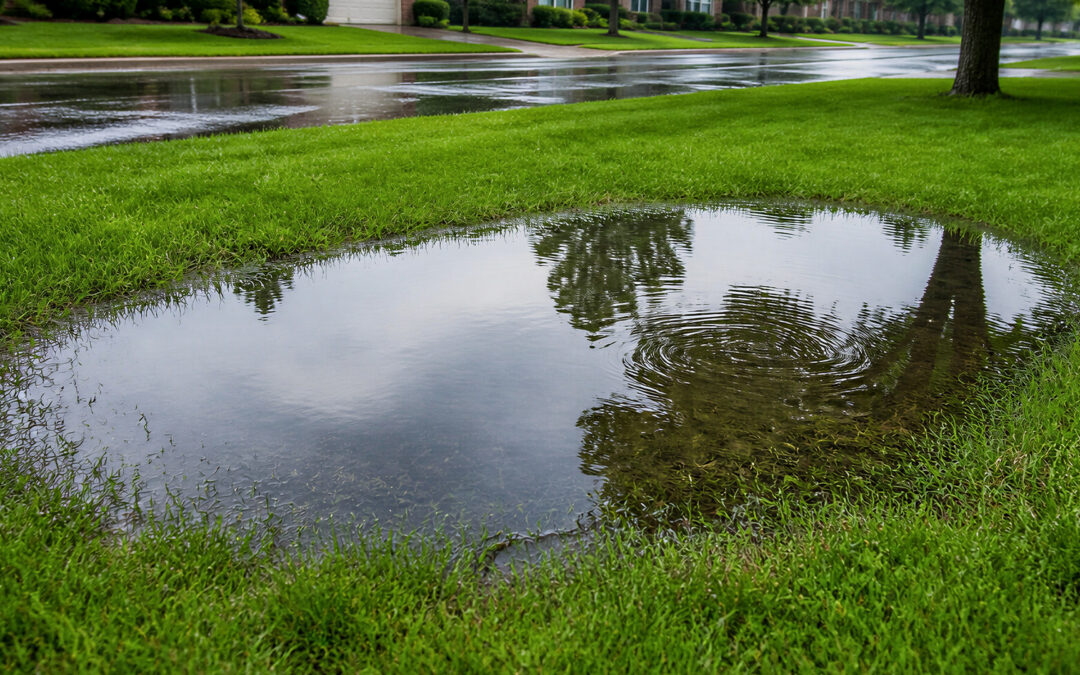
If water keeps pooling in your yard after every heavy rain, there’s usually an underlying drainage problem causing it. Sometimes the ground simply needs time to dry out after a major storm. But if the same area stays soggy for hours or days, or the problem returns after every rainfall, it’s time to find out why.
Around Jefferson City, Columbia, Lake of the Ozarks, and the rest of Mid-Missouri, yards deal with heavy rain, clay soil, low spots, and slopes that don’t always send water where you want it to go. Water’s not picky. It’ll take the easiest path every time, even if that path runs straight through your lawn, landscaping, patio, or driveway.
The trick is figuring out why the water’s collecting there in the first place. Once you know that, you can start thinking about the right fix.
Why Water Pools in Your Yard After Heavy Rain
Water begins pooling when it can’t soak into the ground, drain away, or move through the yard fast enough.
Those are the three ways that water will typically disperse. If your yard drains well, that happens fairly quickly. The water might sit for a little while after a heavy storm, but it shouldn’t turn into a permanent soggy spot.
When a puddle keeps sitting in the same place, though, one of those three things isn’t happening the way it should. That usually comes down to the shape of your yard, the soil underneath it, or how runoff’s being handled around downspouts, patios, and driveways.
Sometimes it can even look like water’s coming up from the ground after heavy rain. In a lot of cases, that’s because the soil’s already saturated. New rain has nowhere to go, so it starts sitting on the surface or pushing into low areas. Water can also move underground from a higher part of the property and show up in a lower spot.
If you only deal with the puddle and ignore where the water’s coming from, you’ll probably be fixing the same problem again after the next storm. The big thing to remember: standing water is usually a symptom. The real problem is water movement.
When Standing Water Becomes a Problem
A little water after a big storm isn’t a crisis. Standing water that keeps coming back can be, though.
Soggy areas can thin out grass, create mud, attract mosquitoes, and make parts of your yard hard to use. If water keeps moving through the same path, it can carve ruts, wash away mulch, carry soil downhill, or leave gravel where gravel wasn’t invited.
Standing water near hardscapes is worth taking more seriously. If it collects around patios, walkways, or driveways, it can contribute to settling, washouts, or soft spots around the edges, especially if the base underneath stays wet for long periods.
Sometimes the hardscape itself is part of the problem, like a bad slope or settled concrete. Other times, it is just catching runoff from the rest of the yard. Either way, it’s worth figuring out which one you’re dealing with before you fix anything. If you’re planning a new patio or outdoor living space, drainage should be part of that conversation from the start. A great patio in a soggy spot isn’t much of a win.
Water pooling near the house deserves attention too. It doesn’t necessarily mean you’ve got a major problem, but water should generally be moving away from the structure, not toward it. If your yard slopes toward the house, or downspouts empty too close, the drainage plan needs a closer look.
Common Causes of Yard Drainage Problems
Most yard drainage problems come back to a handful of common causes. Once you know which one’s affecting your yard, it’s a lot easier to figure out what kind of fix actually makes sense.
Low Spots in the Yard
Water naturally runs to the lowest point. If part of your lawn dips lower than the ground around it, that spot’s going to collect water after every heavy rain.
Poor Grading
Your yard might look mostly flat, but even small slope changes decide where water ends up. If the ground sends water toward a patio, driveway, foundation, or low area, that same puddle’s going to keep showing up.
Clay Soil
Clay soil’s common around here, and it makes drainage tougher. It holds water longer than looser soil, so the ground can stay wet well after the rain stops.
Compacted Soil
When soil gets packed down, water has a harder time soaking in. This tends to happen in areas with heavy foot traffic, equipment traffic, or thin grass coverage.
Downspouts Draining Too Close to the Yard
Roof water has to go somewhere. If a downspout dumps it into a low area or too close to the house, that spot’s going to stay soggy long after the rest of the yard dries out.
Runoff from Patios, Driveways, and Walkways
Hard surfaces shed water fast. If that runoff isn’t directed properly, it can collect in the lawn, wash through landscape beds, or create muddy areas around the edges.
Why Adding Dirt or Sand Isn’t Always Enough
A lot of folks see a low spot and think, “I’ll just add dirt.”
Sometimes that works. If the low spot’s small and water’s not being pushed there from somewhere else, filling and regrading the area might solve it.
If water keeps flowing into that same spot, though, adding dirt might only move the puddle a few feet away, or the new dirt washes out during the next storm. That’s just giving the water fresh material to drag around.
Sand’s another common idea. Folks hear that sand drains well, so they dump it into a soggy area and hope for the best. Sand’s not always the right answer, though, especially with heavy clay soil. If the drainage pattern’s wrong, sand alone won’t fix it. It might just create a different kind of mess.
Trying to fix drainage by adding dirt or sand without correcting the water flow is like putting a towel under a leaking pipe. It hides the symptom, but it doesn’t solve the problem.
Common Ways to Fix Water Pooling in a Yard
The right fix depends on what’s causing the water to collect in the first place. That’s why it helps to look at the grade, soil, runoff, and problem area before jumping into one solution.
Regrade Low Areas
If water’s collecting in a dip, your yard might need to be reshaped so water moves away instead of sitting in one spot. This can be a simple fix in some cases, more involved when the low spot’s connected to a bigger drainage issue.
Redirect Downspouts
Roof water can create a lot of runoff fast. Extending or redirecting downspouts can help keep water from dumping into the lawn, pooling near the house, or collecting in a low spot.
Create a Swale or Drainage Path
A swale is a shallow channel that guides water through the yard in a controlled way. A drainage ditch or rock channel can help too, whenever water needs a clear path to move without washing out the lawn.
Install a French Drain When Needed
A French drain can help collect water and move it away from a soggy area, but it has to be placed and sloped correctly. It’s not the answer for every yard, especially if grading or the runoff pattern is the bigger problem.
Use a Rain Garden in the Right Spot
A rain garden can help collect and absorb runoff in a planned planting area. Put it in the wrong place, though, and you’ll just end up with a nicer-looking puddle.
Improve the Landscaping Around the Problem Area
Plants, mulch, soil improvements, and landscape beds can support better drainage, but they need to be designed around how water actually moves through your yard. They shouldn’t be treated like a cover-up for a bigger drainage problem.
This is where professional landscaping services can make a real difference. A good plan looks at the grade, soil, runoff, hardscapes, and problem areas together instead of guessing at one quick fix.
Who Should You Call for Standing Water in Your Yard?
If water keeps pooling in the same place after heavy rain, you probably need someone who understands more than just the puddle.
A landscaping or outdoor drainage professional can look at the grade of your yard, where runoff’s coming from, how the soil drains, and whether nearby patios, driveways, walkways, retaining walls, or landscape beds are part of the problem.
Sometimes the fix is simple. Other times your yard needs grading, drainage work, a swale, a French drain, or changes to the surrounding landscape.
If the standing water’s connected to a slope or soil washing away, it’s also worth learning how to control erosion on a slope, since drainage and erosion problems often show up together.
Not Sure Why Water Keeps Pooling?
Water pooling in your yard after heavy rain isn’t something to ignore if it keeps coming back. The sooner you know what’s causing it, the easier it is to choose a fix that actually lasts.
If standing water keeps coming back after every heavy rain, WestCo Outdoor Services can help identify what’s causing the drainage problem and recommend a practical solution for your yard.
Contact WestCo Outdoor Services at 573-864-9378 to schedule a free consultation.