
Got a slope, hillside, or creek bank on your property that keeps washing out after every hard rain? You’ve probably thought about planting some trees for erosion control and calling it done. Roots hold soil, right? Problem solved.
Sometimes, yes. Often, not by themselves.
Trees can be part of a solid erosion-control plan, especially years down the road, but they take time to grow and they need to go in the right spot. If water’s already carving channels through your yard, or the soil’s sliding every time it rains, tossing in a few saplings and hoping for the best won’t cut it.
We work on yards all over Jefferson City, Columbia, Lake of the Ozarks, and the rest of Mid-Missouri, and we see the same story every spring: heavy rain, clay soil, steep slopes, and drainage that can’t keep up. Trees can help with all of that, but only if you match the tree to the property.
Do Trees Actually Help With Erosion?
Yes, they do, when you give them time.
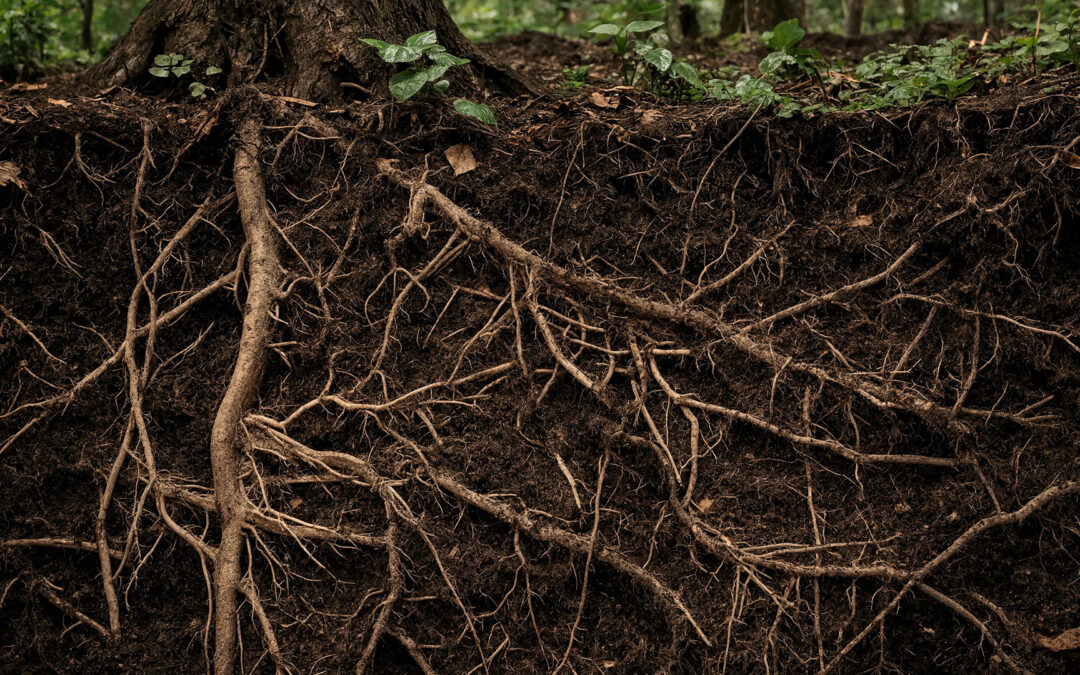
Tree roots grow into the ground and hold soil in place. As a tree matures, its root system spreads out and stabilizes more of the area around it. The canopy also breaks up rainfall before it slams into bare dirt, and fallen leaves build up a natural layer of protection over time.
Trees work slow, though. A young tree doesn’t have much of a root system yet, so it can take years before you see real erosion-control benefits. That’s why we tell customers to think of trees as a long-term piece of the puzzle, not a fast fix for a slope that’s already falling apart.
If your erosion problem is mild, trees planted now will pay off later. If water’s moving fast, soil’s actively sliding, or your mulch and seed keep washing away, you need to slow the water down first.
What Makes a Good Erosion-Control Tree
A good pick for erosion control has a strong root system, handles Missouri weather, and fits the space once it’s fully grown.
Before you pick anything, walk your property and ask yourself:
- Is the spot wet or dry?
- Full sun or partial shade?
- Gentle slope or steep?
- How close is it to your driveway, walkway, patio, foundation, or retaining wall?
- Will it actually have room once it’s grown?
The best tree isn’t just the one with the strongest roots. It’s the one that’ll grow well in that exact spot without creating a new headache later.
Best Trees for Erosion Control in Mid-Missouri Yards
Native and well-adapted trees are usually your best bet for a Missouri yard. They’re built for our weather, soil, and rainfall, and they won’t need constant babying.
Here are a few we recommend often, depending on the site.
River Birch
River birch does well in spots that stay moist or deal with drainage issues. It handles Missouri conditions and works nicely in lower areas that collect more water.
That said, don’t plant it right against the house or next to a walkway without thinking it through. This tree gets big and needs room to spread.
Bald Cypress
Bald cypress handles wet conditions about as well as anything you’ll find. It’s a solid choice for low spots, drainage-prone areas, or anywhere other trees tend to struggle with too much moisture.
It’s not right for every yard, but in the right spot, it’ll give you long-term structure and help hold the soil.
Sycamore
Sycamores are tough, fast-growing trees that handle moisture well and show up a lot near streams and low-lying land. They do best on larger properties, creek banks, or open areas with room to work with.
Just know they drop a good bit of bark and leaf litter as they mature, so keep that in mind if you’re planting one near a patio or walkway.
Bur Oak
Bur oak is a tough native tree that handles most of what Missouri throws at it. It grows slower than some of the others on this list, but it’ll be part of your landscape for decades, and it does best with some room to spread out as it matures.
Black Gum
Black gum works well in a lot of Missouri landscapes and gives you good seasonal color on top of erosion support. It still needs to match your site, especially soil moisture.
Serviceberry
Serviceberry is more of a small tree or large shrub, which makes it a good fit where a full-size shade tree would be overkill. It adds root structure and seasonal interest without taking over the yard.
For smaller slopes or planted beds, it’s often the better fit than trying to make room for one of the larger trees on this list.
Where to Be Careful Planting
Trees help with erosion, but placement matters.
Keep trees a safe distance from foundations, patios, retaining walls, driveways, walkways, utilities, and drainage lines. Roots go wherever they can find water and space, and they don’t check your property plan first.
Be sure to think through the mature size and root habits before anything goes in the ground. If erosion is already eating away at the soil near your driveway, for example, the water runoff needs attention too.
Trees vs. Grasses, Shrubs, and Ground Covers
Trees give you long-term stability, but they’re not always the fastest way to protect bare soil.
Other native plants for erosion control (link to “Native Plants for Erosion Control in Missouri” blog), like grasses, shrubs, and ground covers, often establish quicker and cover exposed ground faster. A young tree might help down the road, but the ground around it still needs protection right now.
That’s why most erosion-control landscapes use a mix: trees for long-term root structure and shade, shrubs for mid-level coverage, and grasses or ground covers to protect the surface while everything else gets established.
When You Need More Than Trees
If water keeps cutting the same path through your yard after every storm, or you’re noticing other signs of erosion on the slope, you’re dealing with a drainage problem, not a tree problem. If the slope’s steep and the soil keeps shifting, you may need grading or something structural, like a retaining wall, before planting does any good. If your mulch, gravel, or seed keeps washing away, trees alone won’t slow the water down enough to stop it.
A retaining wall gives you real structure when the grade’s too steep or the soil’s too loose for roots to hold on their own. Trees and other plants can soften the look and help protect the surrounding soil, but they shouldn’t be expected to hold back a serious grade change by themselves.
How to Start Planning Trees for Erosion Control
Before you plant anything, watch what happens during your next heavy rain.
Where’s the water coming from, and where’s it going? Does it spread out across the slope, or cut one clear path? Is the soil just bare, or is it actually washing away? Are your patios, walkways, driveways, or walls getting hit too?
Those answers matter more than picking a tree off a list. Once you know what’s actually happening on your property, you can pick trees that fit the site: wet spots need different trees than dry hillsides, and a small yard needs a different layout than a few acres out in the county.
Give it time, too. In the first few years, your slope may still need mulch, ground cover, erosion-control fabric, or some drainage work while the roots get established.
Get a Plan for Your Property
Not sure which trees will actually hold up on your slope? Give us a call at 573-864-9378 and we’ll walk the property with you, check your drainage, and put together a plan that fits your yard instead of a generic list. Schedule your free consultation with WestCo Outdoor