
If you’ve been Googling to find out when to aerate your lawn, you’re not alone. Homeowners hear a lot of conflicting advice—”aerate in spring or fall”, “it’s too late”, “wait until it warms up”, or “do it every year”. The reality is that lawn aeration timing depends on a few key factors that matter more than the month on the calendar.
In this guide, we’ll break down the best time to aerate your lawn based on grass type and real growing conditions, plus when it’s better to wait or skip aeration altogether. The recommendations apply broadly across the Midwest and similar climates, including Missouri lawns in areas like Jefferson City, Columbia, and the Lake of the Ozarks.
Quick Answer — When to Aerate Lawn?
<p>The best time to aerate a lawn depends on your grass type and when it’s actively growing. Cool-season lawns are usually best aerated in early fall, while warm-season grasses respond best in late spring to early summer. Aerating during active growth helps grass recover faster, while aerating during dormancy, extreme heat, or drought can stress turf and slow recovery.</p>
Why Lawn Aeration Timing Matters
What Aeration Does to Your Lawn
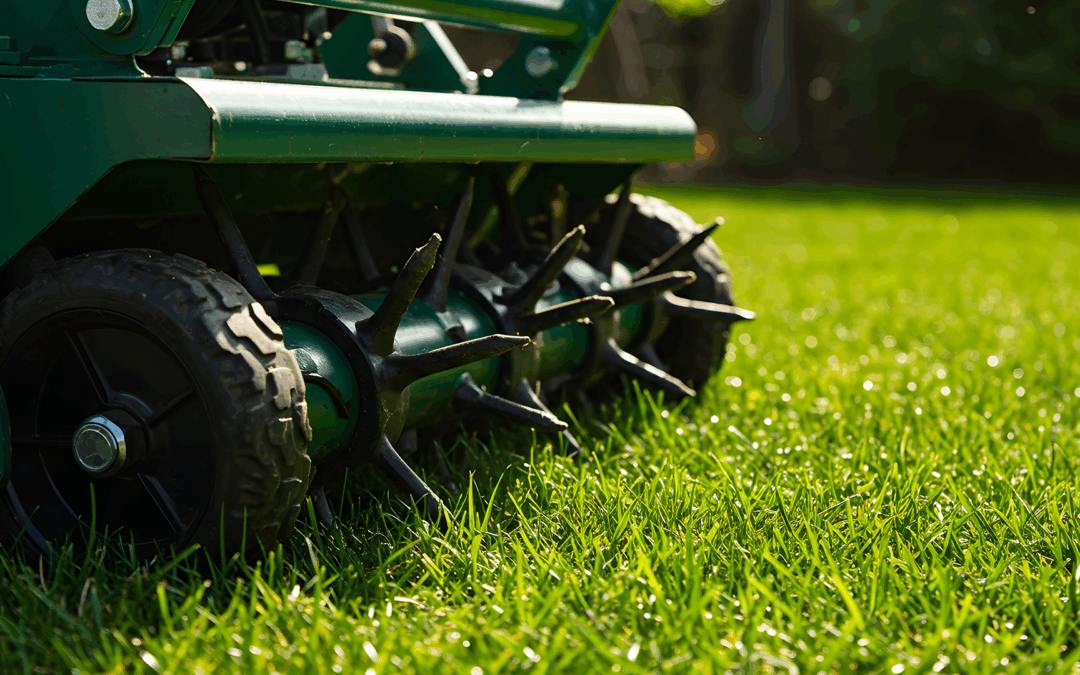
Lawn aeration creates small openings in the soil to help relieve compaction. This allows water, oxygen, and nutrients to reach the root zone more easily, which can support healthier grass growth, especially in lawns with heavy foot traffic or dense soil.
What Happens If You Aerate at the Wrong Time
Aeration also temporarily stresses the lawn. If you aerate when grass isn’t growing well (or can’t recover quickly), you can end up with slower rebound, weaker turf, and more opportunity for weeds to move in.
Best Time to Aerate Lawn Based on Grass Type
If you’re wondering when the best time to aerate your lawn is, the answer depends less on the calendar and more on grass type and growth conditions.
Cool-Season Grasses
Examples: Tall fescue, Kentucky bluegrass, perennial rye
Best window: Early fall
Secondary option: Early spring (with caution)
Fall usually performs best because cool-season lawns naturally push strong root growth, and weed pressure is often lower than in spring. It’s also the season many homeowners pair aeration timing with lawn thickening goals (like overseeding) without battling peak summer stress.
Warm-Season Grasses
Examples: Bermuda, zoysia, St. Augustine
Best window: Late spring to early summer
Warm-season lawns should be aerated once they are fully out of dormancy and actively growing. Aerating too early in spring can slow recovery and reduce the benefits of aeration.
Quick decision table:
|
If your lawn is… |
Most likely grass type |
Best time to aerate your lawn |
Secondary option |
|
Greenest in spring/fall, struggles in mid-summer heat |
Cool-season |
Early fall |
Early spring (cautiously) |
|
Slow to green up in spring, thrives in summer heat |
Warm-season |
Late spring–early summer |
Usually wait until growth is strong |
Spring vs. Fall Aeration: When Should You Aerate Your Lawn?
Fall Aeration (Preferred for Most Lawns)
For many Missouri homeowners, fall is considered the best time of year to aerate their lawns, especially for cool-season grasses. The lawn has time to recover before winter, and the results often carry into the next growing season.
Spring Aeration (Sometimes Appropriate)
Many homeowners ask, can you aerate in the spring, and the answer is yes, but only in specific situations. Spring aeration can work if fall aeration was missed or the lawn is clearly compacted. However, spring conditions can be unpredictable, and increased weed competition may reduce overall effectiveness.
When You Should NOT Aerate Your Lawn
It’s best to avoid aeration when the lawn cannot recover efficiently, including when:
- Soil is frozen or overly saturated
- Grass is dormant
- The lawn is under severe drought stress
- Temperatures are extreme for your grass type
As a general guideline, soil temperatures consistently below ~50°F can slow root recovery, and sustained daytime highs above ~85–90°F can increase stress risk for cool-season lawns.
Many homeowners ask, can you aerate in the summer? While summer aeration is sometimes appropriate for warm-season grasses during active growth, aerating during peak heat usually stresses cool-season lawns and limits recovery.
In those cases, waiting until the next active growing window usually produces better long-term results.
Signs Your Lawn May Be Ready for Aeration
If you’re unsure when to aerate your yard, these signs can help you decide whether timing and conditions are right:
- Water pooling or running off instead of soaking in
- Soil that feels hard or compacted
- Thinning grass in high-traffic areas
- Heavy use from pets, kids, or frequent foot traffic
- Minor thatch buildup
Seeing multiple signs often indicates that lawn aeration could help, especially if timing aligns with active growth.
How Often Should You Aerate Your Lawn?
Most lawns don’t need aeration every year, but frequency depends on soil conditions, foot traffic, and overall lawn health.
- Typical residential lawns: every 1–3 years is often enough
- High-traffic or clay-heavy lawns: may benefit from more frequent aeration
- Low-traffic lawns with good drainage: may only need occasional aeration
The goal is to aerate when it provides real benefit, not simply on a set schedule.
Aeration Timing and Other Lawn Care Practices
Aeration timing is often coordinated with other lawn care tasks, such as fertilization or overseeding, because improved soil access can support stronger results. If you’re unsure how nutrients fit into the timing equation, our guide on how often you can fertilize your lawn without causing damage explains how feeding schedules interact with seasonal growth. Planning aeration during periods of active growth allows the lawn to recover and make better use of nutrients already in the soil.
FAQ — Lawn Aeration Timing Questions
When do you aerate your lawn?
You should aerate your lawn during its active growing season, when grass can recover quickly and make full use of improved soil airflow, water, and nutrients.
Is it too late to aerate my lawn?
It may be too late if grass growth has slowed significantly, the lawn is entering dormancy, or temperatures are extreme. In those cases, waiting until the next optimal season usually leads to better results.
What is the best month to aerate my lawn?
For many cool-season lawns, early fall is often the most dependable month to aerate because grass is actively growing and can recover quickly. For warm-season lawns, late spring to early summer is usually best. The ideal month still depends on grass type, soil conditions, and whether the lawn is actively growing.
Is October too late to aerate?
Sometimes it’s still appropriate, but if grass growth is slowing significantly, it may be better to wait until the next optimal season.
How late can you aerate a lawn?
Aeration is most effective when grass can recover quickly. If the lawn is entering dormancy or the ground is frozen, aeration is usually not recommended.
Should you aerate your lawn every year?
You don’t always need to aerate your lawn every year. Lawns with compacted soil, heavy foot traffic, or clay-heavy conditions may benefit from annual aeration, while healthier lawns often only need it every two to three years. The right schedule depends on soil compaction, grass type, and how the lawn is used.
Does aerating a lawn also dethatch?
Aeration can help reduce minor thatch over time, but it does not replace dedicated dethatching when heavy buildup is present.
Need Help Deciding When to Aerate?
If you’re still unsure when to aerate your lawn, a professional evaluation can help prevent unnecessary stress and ensure the timing makes sense for your grass type and conditions.
WestCo Outdoor Services works with homeowners across Mid-Missouri, including Columbia, Jefferson City, and the Lake of the Ozarks, to assess lawn conditions and recommend the right seasonal approach, so your lawn gets the benefit without the guesswork.