
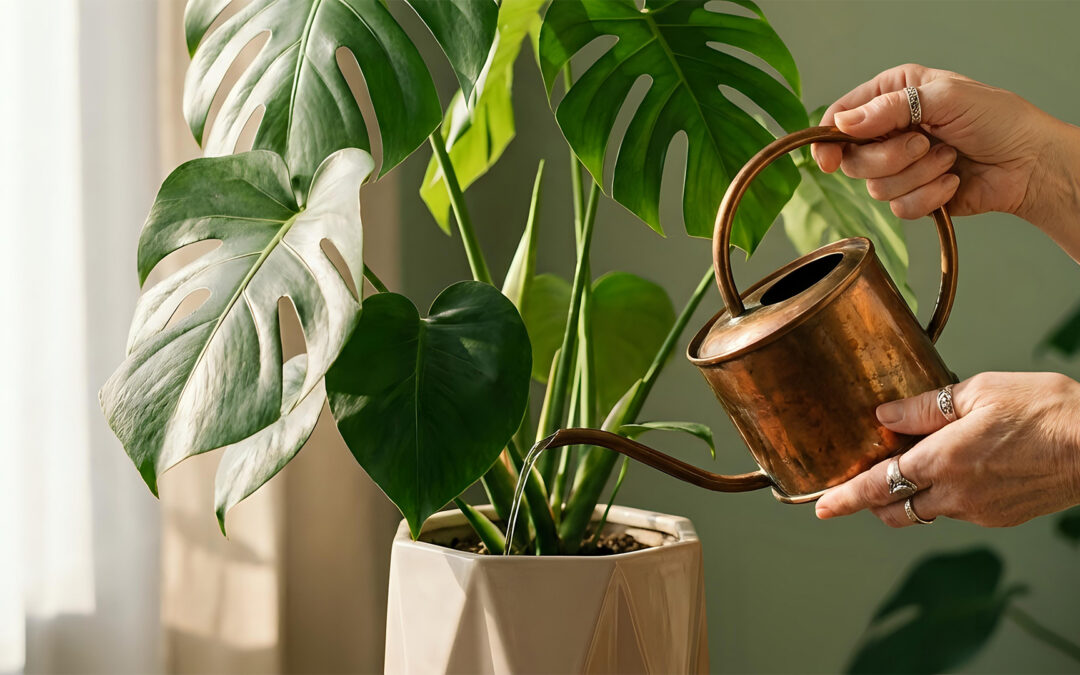
If your plant is drooping, turning yellow, or sitting in soil that stays wet for too long, it is natural to worry that you may have overwatered it. The good news is that many overwatered plants can recover, especially when the issue is caught early. The right next step depends on how serious the problem is, whether the roots are still healthy, and how long the soil has stayed saturated.
This guide explains how to fix overwatered plants safely, when drying the soil may be enough, when repotting may be needed, and what recovery can realistically look like.
Quick Summary: How to Fix Overwatered Plants
To fix overwatered plants, stop watering immediately and let the soil begin drying before adding more moisture. Mild cases often recover with better drainage, airflow, and time, while plants with sour-smelling soil, mushy roots, or severe wilting may need root pruning and repotting in fresh soil. The sooner excess moisture is corrected, the better the chance of recovery.
How Serious Is the Overwatering?
Before deciding whether to wait, inspect roots, or repot, it helps to understand how serious the overwatering may be. Mild cases usually look different from severe root damage.
|
Severity Level |
Common Signs |
What It Usually Means |
Best Next Step |
|
Mild |
Wet soil, slight droop, minor yellowing |
Roots may be stressed but still functional |
Pause watering, improve airflow, monitor |
|
Moderate |
More yellowing, limp leaves, slow recovery |
Root stress may be increasing |
Check drainage, consider root inspection |
|
Severe |
Sour smell, mushy roots, collapse, worsening plant |
Root rot may be present |
Inspect roots, prune rot, repot if needed |
Mild overwatering
Mild overwatering often means the soil is wet, the plant has slight drooping or minor yellowing, and there is no bad smell or collapse. In many cases, drying time, airflow, and better drainage may be enough.
Moderate overwatering
Moderate overwatering may involve continued yellowing, limp leaves, stalled growth, or soil that still drains poorly. At this stage, checking drainage and considering root inspection may be helpful.
Severe overwatering
Severe overwatering may involve sour-smelling soil, mushy roots, a soft stem base, collapse, or a plant that keeps getting worse. These overwatering signs (link to “Signs of Overwatering Plants: How to Identify Them” blog) can suggest root rot, so waiting alone may not be enough.
How to Dry Out an Overwatered Plant Safely
If you realize a plant has been overwatered, the first goal is to reduce excess moisture without creating more stress. Drying should happen gradually while protecting already stressed roots.
Stop watering right away
The first step is to stop adding water. Soil that is already wet needs time to dry before more moisture is introduced.
Remove standing water and improve drainage
Empty trays, saucers, or decorative pots holding water. Make sure drainage holes are open so excess moisture can escape.
Help the soil dry safely
Move indoor plants to bright indirect light, improve airflow, and allow the soil to dry naturally. Avoid intense heat or harsh direct sun.
Do not overcorrect
Do not fertilize immediately, drench the plant again, or rush into repotting unless symptoms are worsening. Mild cases often improve with patience and better drainage.
When drying alone may not be enough
If soil stays soggy, smells sour, or the plant keeps declining, root inspection or repotting may be necessary.
Should You Wait or Repot?
One of the hardest decisions is knowing whether to give the plant time or repot it right away. The safest answer depends on the condition of the soil and roots.
When drying the soil may be enough
Drying the soil may be enough when the plant is only mildly stressed. This is more likely when:
- the soil is wet but not foul-smelling
- the plant has mild drooping or slight yellowing
- the roots are likely still healthy
- the plant is not collapsing
- water drains properly from the pot or planting area
In these cases, it is usually better to pause watering, improve airflow, and monitor the plant before taking more invasive steps.
When root inspection becomes necessary
Root inspection becomes more important when the plant keeps worsening, the soil smells sour, drainage is poor, or the base of the plant feels soft.
Leaves can show stress, but roots often reveal the true severity. If the above-ground symptoms are getting worse even after moisture has been reduced, the root zone may need closer attention.
When repotting may be the better move
Repotting may help when the roots are mushy, dark, or rotting, or when the soil stays saturated because the potting mix is too dense. Fresh, well-draining soil can give stressed roots a better chance to recover.
A simple way to think about it:
- If the soil is wet but the roots seem healthy, dry first.
- If the soil is wet and the plant smells bad or keeps worsening, inspect the roots.
- If the roots are mushy or black, repotting is likely needed.
If drainage problems keep returning, especially in outdoor beds or containers, the growing environment may need more attention than the plant itself.
How to Check for Root Rot
Root condition often gives the clearest picture of how serious overwatering has become. Leaves may show stress, but roots usually reveal whether the plant needs drying time or more active intervention.
What healthy roots look like
Healthy roots are usually:
- white or tan
- firm to the touch
- clean-looking
- not slimy
- free of foul odor
Some plants naturally have darker roots, but healthy roots should still feel firm rather than mushy.
What unhealthy roots look like
Unhealthy roots may be:
- brown or black
- mushy or slimy
- weak or falling apart
- sour or rotten-smelling
These signs can suggest root rot or prolonged excess moisture.
Why it matters
Leaves often show the symptoms of stress, but roots usually show the cause. Checking root condition helps you decide whether the plant may recover with drying time alone or whether repotting and root cleanup may be needed.
How to Repot an Overwatered Plant
Repotting can help when roots are damaged, soil stays saturated, or the potting mix is too dense to dry properly. It is usually most helpful after you have confirmed that drying the soil alone may not be enough.
What to change when repotting
If repotting is needed, focus on the basics:
- use a pot with drainage holes
- use fresh, well-draining soil
- remove clearly damaged or rotting roots
- avoid packing the soil too tightly
- make sure excess water can drain away
What not to do after repotting
After repotting, avoid overcorrecting. Do not drench the plant immediately, fertilize right away, or expect it to look perfect overnight.
A stressed plant needs time to stabilize. Recovery usually shows up slowly through better soil drying, reduced drooping, and eventually new growth.
How to Save an Overwatered Plant: Pots vs In-Ground Plants
Overwatered plants in containers and plants growing in the ground often need different solutions. Pots usually hold moisture in a smaller root zone, while outdoor plants may struggle because of soil or drainage conditions around the site.
How to fix overwatered plants in pots
Potted plants often decline faster because water has less space to drain.
Common causes include:
- blocked or missing drainage holes
- saucers holding standing water
- decorative pots trapping moisture
- dense soil that stays wet too long
Best next steps:
- empty standing water
- make sure the pot drains properly
- move the plant to bright indirect light
- improve airflow
- allow the soil to begin drying
- inspect roots if decline continues
If the soil smells sour or never seems to dry, repotting may be needed.
How to fix overwatered plants in the ground
Outdoor plants may stay wet longer because moisture is influenced by the surrounding landscape.
Common causes include:
- clay or compacted soil
- low spots in the yard
- poor grading
- nearby downspouts
- repeated rainfall
- mulch holding moisture near the base
Best next steps:
- stop supplemental watering
- wait for soil to begin drying
- improve surface drainage where possible
- pull mulch back from the stem or crown
- monitor for worsening decline
- reassess site drainage if problems keep returning
For outdoor plants with repeated water issues, improving the planting area can matter as much as watering less.
Why Overwatering Damages Plants
Plants need water, but roots also need oxygen. When soil stays saturated too long, air spaces in the soil fill with water and roots can struggle to function properly.
Roots need both water and oxygen
Healthy roots need moisture and airflow to absorb water and nutrients.
What happens in soggy soil
When soil remains too wet, roots may become stressed, causing drooping, yellowing, and slow growth.
When root rot develops
If excess moisture continues, weakened roots may turn soft, dark, or foul-smelling.
How Long Does It Take an Overwatered Plant to Recover?
Recovery time depends on how severe the overwatering is and how healthy the roots remain. Some plants bounce back quickly, while others need weeks to stabilize.
Mild stress timeline
Mildly overwatered plants may begin improving within several days once the soil dries and airflow improves. Early recovery signs may be subtle.
Look for less drooping, slower leaf loss, or soil drying at a more normal rate.
Moderate stress timeline
Moderate cases may take one to three weeks to show clearer improvement. This depends on root condition, light, temperature, airflow, and the plant type.
During this time, the plant may not look dramatically better right away. Stabilization is often the first sign of progress.
Severe root damage timeline
Severe root damage can take several weeks or longer. Some plants may only partially recover, especially if much of the root system has rotted.
If the plant continues declining after corrective steps, the root damage may be more serious than it first appeared.
What recovery actually looks like
Recovery may look like:
- soil drying more normally
- drooping becoming less severe
- leaf loss slowing down
- no new foul smell
- new growth beginning
- overall plant condition stabilizing
Old damaged leaves may not always return to normal. New growth is often a better sign of recovery.
When to reassess
Sometimes, an overwatered plant needs more than drying time and patience. If the plant keeps getting worse, it may be time to take another look at the soil, drainage, or root condition.
You may need to reassess if:
- the soil still smells bad
- the plant keeps worsening
- the stem base feels soft
- water still drains poorly
- the soil stays wet for too long
- there is no improvement after a reasonable drying period
When these signs continue, the issue may be more than simple overwatering. Root damage, compacted soil, poor drainage, or a saturated planting site may be involved.
How to Prevent Overwatering Next Time
Once the plant begins to stabilize, prevention becomes the next priority. The goal is not to avoid watering, but to water based on what the plant and soil actually need.
Water based on soil, not schedule
A fixed schedule can lead to overwatering because soil does not dry at the same speed every week. Check the soil before watering instead of assuming it is time.
If the soil still feels wet, wait before adding more water.
Match watering to pot, season, and environment
Water needs can change depending on:
- pot size
- soil type
- humidity
- temperature
- sunlight
- season
- rainfall for outdoor plants
A plant may need less water during cooler, darker, or more humid conditions.
Make drainage non-negotiable
Good drainage helps prevent repeated overwatering. For potted plants, use containers with drainage holes and avoid letting water sit in saucers.
For outdoor plants, drainage may depend on soil condition, grading, mulch, and the planting location.
FAQ: How to Fix Overwatered Plants
Can plants recover from overwatering?
Sometimes. Mildly overwatered plants may recover on their own if the roots are still healthy and the soil is allowed to dry. More serious cases may need root inspection, better drainage, or repotting.
How to dry out overwatered plant soil?
Stop watering, remove standing water, improve airflow, and place the plant in bright indirect light if possible. If the soil stays wet for too long or smells bad, root inspection or repotting may be needed.
Should I repot an overwatered plant right away?
Not always. If the soil is wet but the plant is only mildly stressed, drying the soil may be enough. Repotting is more likely to help when roots are mushy, soil smells sour, or drainage is poor.
How long does it take for an overwatered plant to dry out?
Drying time depends on pot size, soil type, drainage, airflow, humidity, and plant location. Small pots with fast-draining soil may begin drying within a few days, while dense soil or poorly drained containers can stay wet much longer.
Why is my plant still drooping after the soil dried out?
Drooping after the soil dries may mean the roots are still stressed or damaged. The plant may need more time to recover, or the roots may need to be checked if symptoms continue.
Conclusion
Overwatering can often be corrected, but the best next step depends on how serious the problem is. Mild cases may recover with drying time, better airflow, and improved drainage. More serious cases may require root inspection, pruning damaged roots, or repotting into fresh soil.
The most important thing is to avoid overcorrecting. Diagnose first, correct moisture second, and give the plant time to recover.
For outdoor plants that repeatedly struggle with standing water, poor drainage, or ongoing stress, healthy soil and proper site conditions matter. Homeowners in Jefferson City, Columbia, Lake Ozark, and surrounding Mid-Missouri areas can contact WestCo Outdoor Services for help with outdoor plant concerns and professional landscaping services that support long-term plant health. Reach out today for a free consultation.