
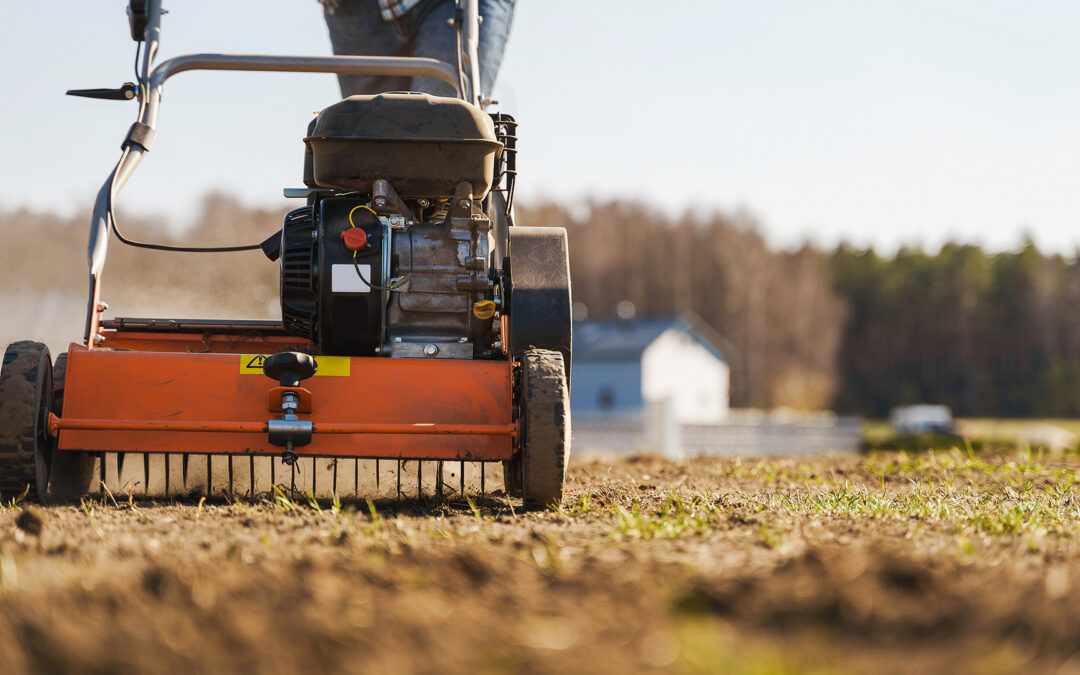
If you’ve been wondering how often you should aerate your lawn, you’re not alone. Homeowners hear a lot of conflicting advice: “aerate every year,” “only aerate if it looks bad,” or “twice a year is best.” The truth is that aeration frequency isn’t a strict calendar rule—it’s a condition-based decision that depends on compaction, soil type, and how your lawn is used.
This guide will give you a simple baseline schedule, then show you how to adjust it if you have clay soil, high traffic, or visible compaction signs. The goal is clarity, not pressure—so you can aerate when it actually helps and skip it when it doesn’t.
Quick Answer: How Often Should You Aerate Your Lawn?
Most lawns should be aerated once per year, especially if they have clay soil or moderate foot traffic. Lawns with heavy compaction may benefit from aeration twice a year, while sandy or low-traffic lawns may only need it every 2–3 years. The right schedule depends on soil type, traffic level, and visible signs of compaction.
How Often to Aerate Your Lawn: The Standard Recommendation
Most lawns: once per year (typical baseline)
For many homeowners, how often to aerate their lawn comes down to one simple baseline: once a year is common because soil naturally compacts over time from rainfall, mowing, and regular foot traffic.
This doesn’t mean every lawn must be aerated annually—only that annual aeration is often a reasonable maintenance rhythm when compaction signs tend to return.
In our experience working with lawns across Central Missouri, compaction tends to return annually in clay-heavy or high-traffic yards, even when the lawn otherwise looks healthy.
When “every 2–3 years” is enough
If your lawn drains well, gets low traffic, and doesn’t show compaction symptoms, aerating every 2–3 years may be sufficient. Think of this as “as needed” rather than “never.” If conditions stay good and the lawn continues performing well, you may not need to aerate on a strict annual cycle.
Aeration is not a calendar event—it’s a condition response
The best schedule is the one that responds to what the lawn is doing. If your soil stays open and your turf stays dense, more aeration won’t automatically create better results.
The “Why” Behind Frequency: Simple Compaction Logic
What compaction does to your lawn
When soil compacts, air pockets collapse. Roots have a harder time expanding, water may pool instead of soaking in, and nutrients don’t move through the soil as effectively. That’s why compaction is one of the biggest reasons homeowners increase aeration frequency.
Why traffic and clay change the schedule
Traffic compresses the same areas repeatedly—walk paths, play areas, pet routes. Clay soil tends to compact more easily and drain slower, which can make compaction symptoms show up sooner and last longer.
Aeration Frequency Table Summary
| Lawn situation | Recommended frequency |
| Typical residential lawn | 1x per year |
| Clay soil or moderate traffic | 1x per year (sometimes 2x if compaction persists) |
| High traffic (kids/pets/play areas) | 1–2x per year |
| Sandy / well-draining / low traffic | Every 2–3 years (sometimes longer if no compaction signs) |
This table reflects general guidance. Actual frequency depends on compaction signs and lawn performance.
Should You Aerate Your Lawn Every Year?
Often, yes—especially if your lawn is prone to compaction. But some lawns can skip a year without consequences when conditions are strong.
When annual aeration makes sense
Annual aeration is more likely to make sense if you have:
- clay-heavy soil
- regular foot traffic
- pooling water after rain
- thinning in high-use areas
When you might be able to skip this year
If you’re trying to decide whether you can skip, use this quick checklist:
☐ No standing water after rain
☐ Soil doesn’t feel “hard” when moist
☐ Grass is filling in evenly
☐ High-traffic areas aren’t thinning
☐ Your last aeration was recent and results held up
If you want a deeper “do I need aeration at all?” decision guide, check our guide: Is Lawn Aeration Necessary? How to Decide If You Need It.
When You May Need Aeration More Than Once Per Year
How Often to Aerate High-Traffic Lawn?
Usually 1–2 times per year, depending on how quickly compaction returns. High-use areas compress soil faster because repeated pressure reduces air space and limits root growth.
How Often to Aerate Lawn Clay Soil?
Annual aeration is often the starting point, and twice per year may help if compaction persists. Clay’s small particles pack tightly and tend to drain slower, so compaction symptoms can show up more readily.
“Twice per year” should have a purpose
Twice-yearly aeration shouldn’t be a default. It’s best viewed as a corrective strategy when the lawn continues showing compaction symptoms after a normal annual schedule.
Can You Over Aerate Your Lawn?
If you’re wondering whether you can aerate too much — yes, you can. In many cases, more isn’t better. Aerating too frequently may stress turf without providing additional benefit, especially if the lawn is already draining well and growing evenly.
Signs you may be aerating too much
Here are a few general signs your schedule may be too aggressive:
- You aerate often but don’t see improved drainage or density
- The lawn looks “beat up” after aeration and takes a long time to rebound
- You’re aerating on schedule even though compaction signs aren’t present
- Thin areas don’t improve because the real issue is watering, mowing, or nutrients (not compaction)
When not to aerate
Avoid aeration when the lawn can’t recover well (for example, during dormancy or extreme stress). For seasonal timing specifics, check our guide on: When To Aerate Lawn: Best Timing by Season & Grass Type.
Aeration Frequency Decision Tree
Use this quick decision tree to choose the right schedule:
- If you aerated last year and you do not see compaction signs → consider skipping this year.
- If you have clay soil + pooling water + high traffic → 1–2 times per year may be appropriate.
- If your lawn drains well, has low traffic, and shows no thinning → every 2–3 years may be sufficient.
- If you’re unsure → consider a professional lawn evaluation.
FAQs – Aeration Frequency
How often can you aerate your lawn?
Most lawns do well with aeration once per year. Lawns with heavy compaction, clay soil, or high traffic may benefit from 1–2 times per year.
Do you need to aerate your lawn every year?
Not always. If your lawn drains well and compaction signs are minimal, you may be able to skip a year without issues.
How often should you aerate your lawn if you have clay soil?
Many clay-heavy lawns benefit from annual aeration. If compaction symptoms persist, twice per year may help as a corrective approach.
Can you aerate a lawn too much?
Yes. Aerating too frequently can stress turf without adding benefit, especially when compaction signs aren’t present.
How to tell if a lawn needs aeration?
Look for pooling water, hard soil, thinning in high-traffic areas, or repeated compaction.
When not to aerate your lawn?
Avoid aeration when the lawn can’t recover efficiently.
Choose a Schedule That Matches Your Lawn
As a baseline, most lawns benefit from aeration once per year. If you have clay soil or high traffic, 1–2 times per year may be appropriate when compaction symptoms persist. If your lawn is sandy, well-draining, and low-traffic, you may only need aeration every 2–3 years.
If you’re still unsure which schedule fits your lawn, a professional assessment can help you avoid unnecessary work and focus only on what your soil and turf actually need. WestCo Outdoor Services supports homeowners across Mid-Missouri, including Jefferson City, Columbia, and the Lake of the Ozarks, with condition-based recommendations and long-term lawn health in mind.